
Routine Care
Dental Implants in Long Island City
Dental implants in Long Island City have revolutionized the way we approach oral health, particularly at Hunters Point Dentistry. Under the expert guidance of Dr. Elena Cho, this clinic stands at the forefront of delivering innovative dental implant solutions. These implants are not just about replacing missing teeth; they represent a new era in dental care, combining aesthetics with functionality. Dr. Cho, with her extensive experience and patient-centered approach, ensures that each implant is tailored to meet individual needs, thus enhancing not only smiles but also the overall quality of life for her patients in Long Island City.
Treatment Overview
Treatment Duration
1 to 2 Hours
No.of Visits
Depend on Patient's Condition
Clinic Stay
Few Hours
Effects
Swelling
Cost (approx.)
$$$
Invasive
Surgery required
Stay with Relative
12 Hours
No Hard Meal
Soft diet

Benefits
Dental implants offer several benefits, including:
Permanent Solution: Implants are a long-lasting and permanent replacement for missing teeth.
Improved Appearance: They look and feel like natural teeth, enhancing your smile and facial aesthetics.
Enhanced Functionality: Implants restore full chewing and biting functionality, allowing you to enjoy a varied diet.
Preserve Jaw Health: Implants stimulate jawbone growth, preventing bone loss and maintaining facial structure.
Durability: With proper care, dental implants can last a lifetime.
Comfort: They eliminate discomfort associated with removable dentures.
Speech Improvement: Implants prevent speech issues caused by missing teeth.
Convenience: No need for adhesives or removal, making them hassle-free.
Procedure
The procedure for dental implants generally involves several steps:
Initial Consultation: This includes a dental exam, X-rays, and sometimes, 3D images. The dentist, possibly in collaboration with other dental specialists, will discuss the plan for the implant procedure.
Removal of Damaged Tooth (if applicable): If there’s a damaged tooth, it needs to be extracted before implant placement.
Jawbone Preparation (Grafting, if necessary): If your jawbone isn’t thick enough or is too soft, you might need bone grafting. This process involves transplanting a piece of bone to your jawbone. The transplant source could be from another part of your body or a synthetic material. Healing from bone grafting can take several months.
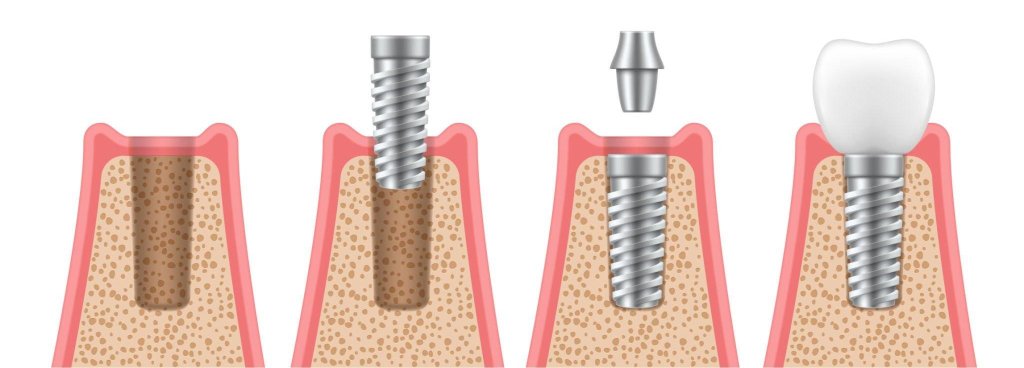
Dental Implant Placement: During this surgical procedure, the dental implant (a small post made of titanium) is placed into the bone socket of the missing tooth. As the jawbone heals, it grows around the implanted metal post, anchoring it securely in the jaw. This healing process can take several weeks to months.
Bone Growth and Healing: Once the implant is placed in your jawbone, osseointegration begins. This is a process where the jawbone unites with the surface of the dental implant. This process can take several months and helps provide a solid base for your new artificial tooth, just as roots do for your natural teeth.
Abutment Placement: Once osseointegration is complete, a small connector post called an abutment is placed on the dental implant to securely hold the new tooth. To place the abutment, a minor surgery is usually required. In some cases, the abutment is attached during the initial implant surgery.
Making and Attaching the New Tooth (or Teeth): After your gums heal, more impressions of your mouth and remaining teeth are made. From these impressions, the dentist makes the crown, which is the realistic-looking artificial tooth. The crown can’t be placed until your jawbone is strong enough to support use of the new tooth.
Aftercare: Good dental hygiene is vital for the longevity of the dental implant. Regular dental checkups are necessary, and you need to brush and floss around the implant just like your natural teeth.
It’s important to note that the total time for an implant procedure can vary widely depending on the individual’s situation, the number of teeth involved, and other factors. Patience is key, as rushing the process can lead to complications or less optimal outcomes.
instructions
Caring for dental implants involves both pre-operative and post-operative instructions to ensure the best outcomes. Here’s a general guide:
Pre-Operative Instructions
- Consultation and Planning: Attend all necessary consultations with your dentist or oral surgeon to discuss the procedure and plan your treatment.
- Medical History Review: Inform your dentist of your full medical history, including any medications you are taking and any medical conditions you have.
- Pre-Operative Examination: Undergo any recommended examinations or tests, such as X-rays or dental impressions.
- Oral Hygiene: Maintain good oral hygiene leading up to the surgery to reduce the risk of infection.
- Fasting: If you are receiving sedation or general anesthesia, you may need to fast (not eat or drink) for a certain period before the surgery.
- Arrange Transportation: If you are receiving sedation or general anesthesia, arrange for someone to drive you home after the procedure.
Post-Operative Instructions
- Bite Gently but Firmly: Immediately after the implant, bite down gently but firmly on a gauze pad to reduce bleeding and aid in clot formation.
- Rest: Plan to rest for the remainder of the day following your surgery. Avoid strenuous activities for a few days.
- Pain Management: Take prescribed pain medications as directed. Over-the-counter pain relievers can also be used as recommended by your dentist.
- Ice Application: To reduce swelling, apply an ice pack to the cheek near the implant site for the first 24 hours.
- Eat Soft Foods: Stick to soft foods and liquids for a few days post-surgery. Gradually reintroduce harder foods as healing progresses.
- Oral Hygiene: Maintain good oral hygiene but be gentle around the surgical site. Use a soft-bristled toothbrush and avoid vigorous rinsing or spitting.
- Avoid Smoking: Smoking can inhibit healing and should be avoided.
- Follow-Up Appointments: Attend all scheduled follow-up appointments to ensure proper healing and progress.
- Report Any Complications: Inform your dentist immediately if you experience excessive bleeding, severe pain, or signs of infection.
Long-Term Care
- Regular Dental Check-Ups: Regular visits to your dentist are crucial for the longevity of your implant.
- Consistent Oral Hygiene: Brush twice a day, floss daily, and consider using an antiseptic mouthwash to maintain oral health.
- Avoid Damaging Habits: Avoid chewing on hard items like ice or hard candy, which can damage the crown.
Remember, these are general instructions, and your dentist may provide specific guidance tailored to your individual needs and circumstances.
Cost of Dental Implants in Long Island City
Dental implant costs can vary widely depending on various factors, including the specific needs of the patient, the number of implants required, and any additional procedures (like bone grafting) that may be necessary.
For the most accurate and up-to-date information regarding pricing, it’s best to contact Hunters Point Dentistry directly. They can provide a detailed cost estimate based on a consultation and assessment of your individual needs.
Dr. Elena Cho's recommendation

As Dr. Elena Cho at Hunters Point Dentistry, I advocate for dental implants as an effective, long-lasting solution for missing teeth. They offer a natural look, preserve jawbone integrity, improve oral health, and enhance self-esteem. Ideal for those with good oral hygiene, they’re a durable investment in your dental well-being.
It’s important to note that while dental implants are an excellent option for many, they may not be suitable for everyone. Candidates for dental implants should have healthy gums and enough bone to support the implant. Additionally, they should be committed to good oral hygiene and regular dental visits.
I advise patients to schedule a consultation to discuss their specific needs and determine if dental implants are the right choice for them. During this consultation, we can address any concerns, discuss the procedure in detail, and create a personalized treatment plan.
FAQ for Dental Implants in Long Island City
Dental implants are artificial tooth roots, usually made from titanium, used to support a restoration for a missing tooth or teeth, helping to prevent or stop jaw bone loss.
The implant, which is a titanium post, is surgically inserted into the jawbone where it acts as a tooth root. Over time, it fuses with the bone, providing a sturdy base for a crown or artificial tooth.
The procedure is typically done under anesthesia, so you shouldn’t feel pain during the surgery. Post-surgery, there may be some discomfort, but it’s usually manageable with prescribed pain medication or over-the-counter pain relievers.
Dental implants have a high success rate, often cited around 95%. However, success can depend on the site in the jaw where the implants are placed and patient health factors.
Care for them as you would natural teeth – regular brushing, flossing, and dental check-ups are essential.
The process can vary, taking anywhere from a few months to over a year. It includes the initial consultation, the surgical placement of the implant, the healing period, and the placement of the crown.
Ideal candidates have good general and oral health, adequate bone in the jaw to support the implant, and healthy gums. Smokers or those with chronic disorders like diabetes or heart disease need special evaluation.
With proper care and maintenance, dental implants can last a lifetime. The crown attached to the implant may need to be replaced due to wear and tear after 10-15 years.
While rare, implants can fail due to factors like infection, insufficient bone support, poor oral hygiene, or certain medical conditions.
The cost varies depending on numerous factors, including the number of implants, the need for additional procedures like bone grafts, and geographical location. It’s best to consult with your dentist for a precise quote.