
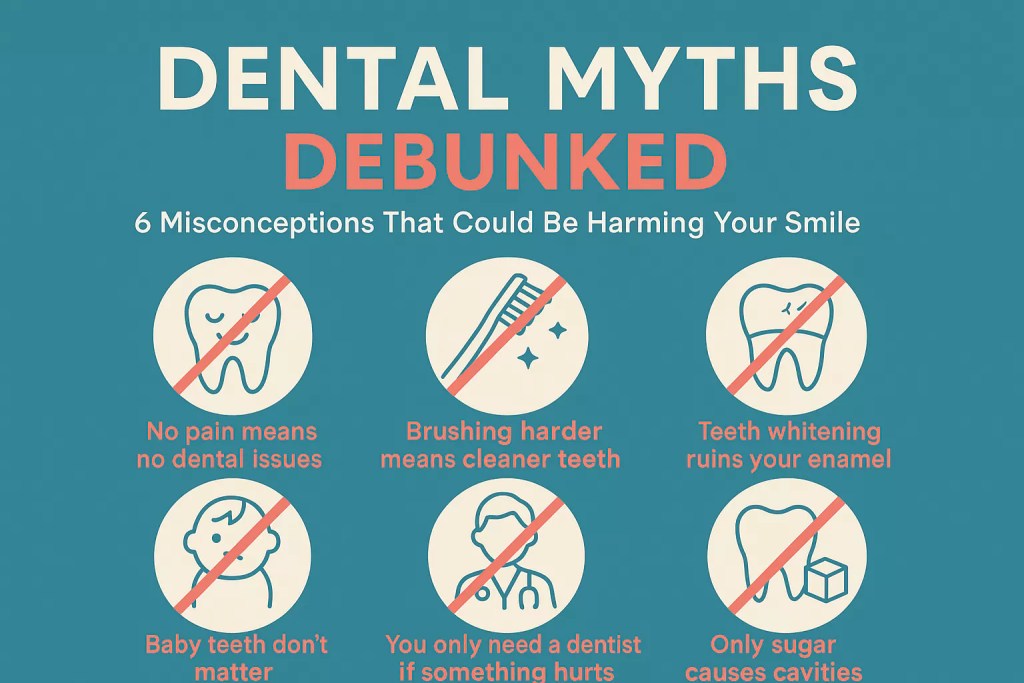
When it comes to oral health, what you think you know can sometimes do more harm than good, which is why we will go over dental myths debunked. Misinformation spreads quickly—whether it’s from family, friends, social media, or outdated websites—and unfortunately, dental myths are some of the most common and damaging. That’s why we’ve created this guide: to get these dental myths debunked once and for all.
At Hunters Point Dentistry, our mission goes beyond cleanings and fillings. We believe that education is just as powerful as any dental treatment. Dr. Cho and the team often hear patients express concerns rooted in myths—and correcting those ideas can lead to better long-term oral health.
Let’s set the record straight on the six most common dental myths that could be putting your smile at risk.
Dental Myths Debunked #1: “No Pain Means No Dental Issues”
One of the most harmful myths in dentistry is the idea that pain is the only sign of a problem. This belief leads many people to skip regular dental checkups, assuming that everything is fine as long as nothing hurts.
Unfortunately, this simply isn’t true.
Many dental problems—like tooth decay, gum disease, and even early-stage infections—can develop without any noticeable symptoms. You could have a cavity or bone loss and not feel a thing until the condition has become advanced and more difficult (and expensive) to treat.
At Hunters Point Dentistry, Dr. Cho routinely discovers early signs of dental issues during routine exams—even in patients who report feeling “perfectly fine.” These early discoveries are key to preventing future pain, tooth loss, or complex treatments.
Regular dental visits every six months allow us to:
- Catch cavities before they grow
- Monitor your gums for signs of disease
- Check for jaw issues or grinding habits
- Inspect your mouth routinely to spot signs of oral cancer early
The lesson? Don’t wait for pain to visit the dentist. Be proactive instead of reactive.
Dental Myths Debunked #2: Does Brushing Harder Really Mean Cleaner Teeth?
Brushing your teeth is essential—but how you brush is just as important as doing it at all. Many people believe that brushing with more force will remove more plaque and give them a cleaner mouth. This is one of the most widespread dental myths debunked by dental professionals.
Brushing too hard, especially with a firm-bristled toothbrush, can actually cause serious damage over time:
- Enamel erosion, which increases sensitivity and decay risk
- Gum recession, exposing the roots of your teeth
- Irritation and inflammation of the soft tissues in your mouth
Dr. Cho frequently sees patients at Hunters Point Dentistry who experience these issues due to overbrushing. What they don’t realize is that plaque is actually soft and can be removed with gentle, thorough brushing.
Here’s what proper brushing technique looks like:
- Use a soft-bristled toothbrush
- Tilt your toothbrush at a 45-degree angle toward your gumline
- Use gentle, circular motions
- Brush for at least two minutes
- Replace your toothbrush every three months
If you’re unsure about your technique, ask our hygienists during your next cleaning—we’re always happy to show you the best practices.
Dental Myths Debunked #3: “Teeth Whitening Ruins Your Enamel”
With so many whitening products on the market, it’s no surprise that patients often worry about the safety of whitening their teeth. This concern is valid—but only when it comes to unregulated or overused products. The truth is, professional whitening is safe and doesn’t damage your enamel when done correctly.
At Hunters Point Dentistry, we use professional-grade whitening systems that are customized for each patient. These products are designed to minimize sensitivity and protect your enamel. Dr. Cho evaluates each patient’s oral health before recommending whitening to ensure it’s appropriate and safe.
It’s important to understand the difference between:
- In-office whitening – controlled, effective, fast results
- At-home dentist-supervised kits – custom trays, gradual whitening
- Over-the-counter strips or pastes – can be overused or poorly applied
- DIY remedies (like baking soda, lemon juice, charcoal) – potentially harmful and enamel-eroding
So if you’re dreaming of a whiter smile, don’t fall for scary rumors. The best way to get results and protect your teeth is to talk to a professional like Dr. Cho. We’ll help you achieve a confident, radiant smile without compromising your oral health.
Dental Myths Debunked #4: “Baby Teeth Don’t Matter—They’ll Fall Out Anyway”
This myth is particularly damaging because it influences how parents care for their children’s teeth. Many believe that because baby teeth are temporary, they don’t need the same attention or care. In reality, this is one of the most critical dental myths debunked in pediatric dentistry.
Here’s why baby teeth matter:
- They help children speak clearly
- They allow proper chewing and nutrition
- They hold space for permanent teeth to erupt properly
- Untreated decay in baby teeth can lead to infections and early tooth loss
At Hunters Point Dentistry, Dr. Cho and our team are passionate about pediatric dental care. We encourage parents to bring their children for their first visit by age one. We also teach kids fun, easy ways to brush and make dental visits a positive experience.
Neglecting baby teeth can lead to lifelong dental issues—including overcrowding, misaligned teeth, and expensive orthodontic treatment. Taking care of those tiny teeth now builds healthy habits for life.
#5: “You Only Need a Dentist If Something Hurts”
A lot of people see the dentist as a “last resort”—someone you visit only when something breaks, bleeds, or causes pain. Rather than waiting for symptoms to appear, the goal of dental care is to stay ahead of potential problems through early detection. Waiting for symptoms often leads to more serious and costly issues.
Preventive dental care includes:
- Regular cleanings to remove plaque and tartar
- Fluoride treatments to strengthen enamel
- Dental sealants to protect cavity-prone teeth
- Monitoring for signs of grinding or jaw disorders
- Oral cancer screenings
During your visit to Hunters Point Dentistry, Dr. Cho does more than check for cavities. He looks for early warning signs of gum disease, tooth wear, bite problems, and much more. Early detection means simpler treatment—and a much lower chance of needing root canals, extractions, or crowns.
So if it’s been a while since your last checkup, don’t wait for something to go wrong. Be proactive. Your smile will thank you.
#6: “Only Sugar Causes Cavities”
It’s easy to blame sugar for all dental issues—and while sugar is a major factor, it’s not the only cause of cavities. The truth is that cavities result from a combination of factors, not just your sweet tooth.
Let’s take a closer look at how cavities actually form:
- Bacteria in your mouth feed on carbohydrates—this includes sugars and starches (like chips, bread, pasta).
- These bacteria produce acids that weaken your enamel.
- Over time, this leads to tooth decay, especially in areas you miss while brushing or flossing.
So yes, sugar is a big deal—but it’s only part of the picture.
Other major contributors to cavities include:
- Poor brushing and flossing habits
- Not drinking enough water
- Dry mouth (lack of saliva)
- Frequent snacking between meals
- Enamel weakness from acid erosion
At Hunters Point Dentistry, Dr. Cho helps patients understand their personal risk factors for decay. We assess not only your sugar intake but also your lifestyle, brushing habits, and saliva flow. In some cases, we may recommend fluoride treatments, sealants, or dietary changes to reduce your risk.
We also emphasize the importance of hydration—drinking water throughout the day helps rinse away food particles, reduce acidity, and stimulate healthy saliva production.
So the next time someone says cavities only happen to people who eat candy all day, remember: dental myths debunked! It’s more complex than that.
Bonus Myth: “Flossing Isn’t That Important”
While we said we’d cover five myths, here’s a bonus one—because it’s that important. Flossing is often skipped or underestimated, but it’s one of the most essential parts of your oral care routine.
Flossing cleans the 40% of your tooth surfaces that brushing can’t reach. It helps:
- Prevent cavities between teeth
- Remove plaque before it hardens into tartar
- Protect your gums from disease
If flossing feels awkward or difficult, ask Dr. Cho or any team member at Hunters Point Dentistry for tips or flossing alternatives like soft picks or water flossers.
Why Debunking Dental Myths Matters
When patients believe in dental myths, they can unintentionally cause harm to their oral health. That’s why we work hard at Hunters Point Dentistry to provide clear, compassionate education—so our patients can make informed, confident decisions.
By getting these dental myths debunked, we hope you walk away feeling more empowered to take control of your dental health. Whether it’s brushing smarter, flossing daily, or scheduling regular visits, the choices you make today will shape the future of your smile.
Dr. Cho and the team are always here to answer your questions, clarify doubts, and support you on your health journey.
Ready to Take Control of Your Oral Health?
If you’ve fallen for one of these myths before, don’t worry—you’re not alone. The important thing is taking the next step toward better oral health. At Hunters Point Dentistry, we’re committed to helping our patients achieve healthy, beautiful smiles in a supportive, judgment-free environment.
Dr. Cho and our dedicated team proudly serve the diverse communities of LIC, Hunters Point, Queensboro Plaza, Court Square, Gantry Plaza, Dutch Kills, Ravenswood, Blissville, and Queensbridge. Whether you’re a first-time visitor or a long-time patient, we welcome you with personalized care and attention to detail.
If you’re ready to schedule your next visit or simply want to learn more about our services, call us at (347)507-5759 or use the link below to book your appointment today.
Let’s keep those dental myths debunked—and your smile shining for years to come.
Disclosure:
This information is for educational purposes only and does not constitute medical advice. For personalized advice and diagnosis, please consult with a qualified dental professional at Hunters Point Dentistry.