
Routine Care
Dental CT Scan in Long Island City
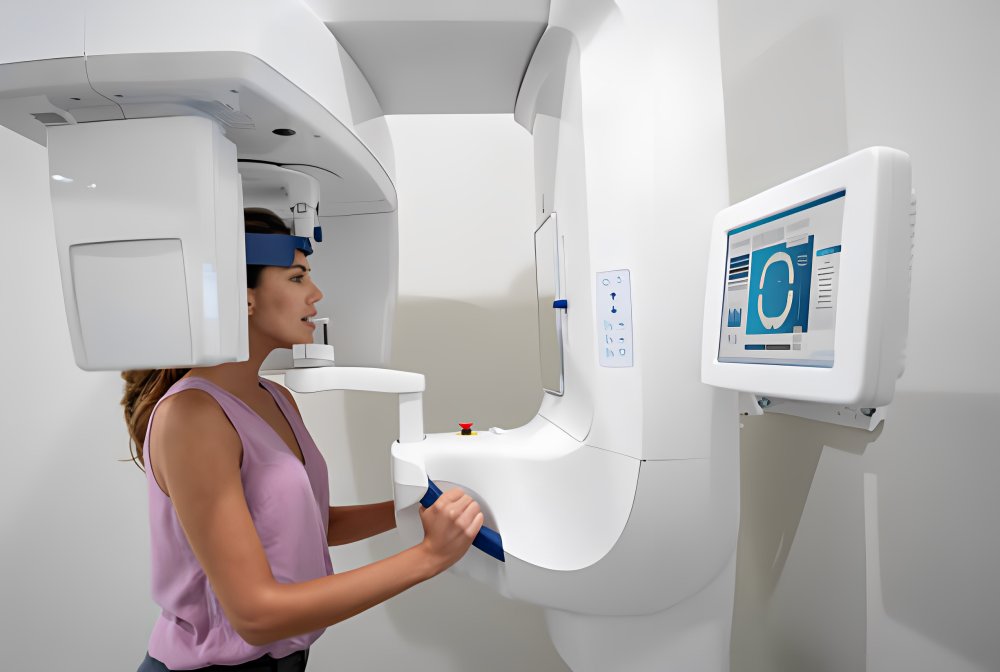
At Hunters Point Dentistry in Long Island City, the introduction of Dental CT Scan technology under the expert supervision of Dr. Elena Cho marks a significant advancement in dental diagnostics and treatment planning. This state-of-the-art imaging technique provides detailed 3D views of the teeth, soft tissues, nerve pathways, and bone in a single scan, revolutionizing patient care. Dr. Cho utilizes Dental CT Scans to precisely plan complex procedures such as dental implants, evaluate oral health comprehensively, and diagnose conditions that are not detectable with traditional x-rays, ensuring the highest standard of care for her patients in Long Island City.
Treatment Overview
Treatment Duration
20 to 40 seconds
No.of Visits
1 to 2 Days
Clinic Stay
Not required
Effects
Radiation Exposure
Cost (approx.)
$$
Benefits
Dental CT Scans offer numerous benefits in dentistry, enhancing both diagnostic accuracy and treatment outcomes:
High-Resolution 3D Imaging: Provides detailed three-dimensional images of teeth, soft tissues, nerve paths, and bone, giving a comprehensive view of the oral structure.
Accurate Diagnosis: Helps in accurately diagnosing dental issues which might not be visible in traditional X-rays, such as tiny fractures or hidden infections.
Precise Treatment Planning: Especially crucial for complex procedures like dental implants, root canals, or orthodontic treatments, as it allows for precise planning and placement.
Detection of Oral Health Issues: Assists in early detection of potential oral health problems, including bone abnormalities, cysts, tumors, and other pathologies.
Minimally Invasive: Enables dentists to perform more accurate, less invasive procedures, reducing recovery time and improving patient comfort.
Better Patient Education: The clear and detailed images can be used to better explain conditions and treatment options to patients, aiding in their understanding and decision-making.
Time-Efficiency: Rapid scanning process saves time both for the patient and the dental practitioner.
Lower Radiation Exposure: Compared to traditional medical CT scans, dental CT scans generally expose patients to lower levels of radiation.
By providing such detailed and precise information, dental CT scans have become an invaluable tool in modern dentistry, significantly improving the quality of care and patient outcomes.
Procedure
The procedure for a dental CT scan is straightforward, non-invasive, and typically follows these steps:
Preparation:
- No special preparation is usually needed. However, patients are often advised to wear comfortable clothing and avoid metal accessories that might interfere with the imaging process.
- Before the scan, the dentist will review the patient’s medical history and discuss the purpose of the CT scan.
Positioning the Patient:
- The patient is seated or positioned lying down in the CT scanner.
- The head is positioned correctly, and the patient is asked to remain still during the scan to ensure clear images.
Performing the Scan:
- The CT scanner, typically a cone-beam CT (CBCT) machine for dental purposes, rotates around the patient’s head. This process captures a series of images from different angles.
- The scan usually takes only a few minutes, during which multiple images are captured.
Processing the Images:
- The captured images are digitally processed to create a 3D model of the patient’s dental structures, including teeth, jawbone, and surrounding tissues.
- This process is quick, and the images are available for review almost immediately.
Review and Analysis:
- The dentist, often with the aid of specialized software, reviews the 3D images to assess the patient’s oral health, diagnose issues, and plan treatments.
Post-Scan Consultation:
- After the scan, the dentist discusses the findings with the patient. This may include showing the 3D images and explaining the details of any identified conditions or proposed treatments.
Follow-Up:
- Depending on the findings, the dentist may recommend further diagnostic tests, start a treatment plan, or schedule follow-up appointments.
Dental CT scans are highly efficient and provide valuable information for a variety of dental procedures, particularly in cases requiring detailed views of the oral and maxillofacial region.

instructions
When instructing a patient for a dental CT scan, it’s important to provide clear and concise information to ensure the procedure goes smoothly and effectively. Here’s what patients should be told:
Before the Scan:
- No Special Preparation Needed: Generally, no special preparation is required for a dental CT scan. You can eat and drink as usual unless otherwise instructed by your dentist.
- Wear Comfortable Clothing: Choose comfortable, loose-fitting clothing for your appointment. Avoid wearing garments with metal zippers, buttons, or embellishments as metal can interfere with the imaging process.
- Remove Metal Objects: Remove any jewelry, eyeglasses, hairpins, and removable dental appliances, as metal objects can affect the clarity of the images.
- Inform About Medical Conditions: Let your dentist know if you have any allergies, particularly to contrast materials, or if you have a medical condition, such as pregnancy, that may affect the procedure.
During the Scan:
- Stay Still: It’s crucial to stay as still as possible during the scan to ensure clear images. Any movement can blur the images.
- Follow Instructions: The technician or dentist will guide you on how to position your head and will provide instructions during the scan. It’s important to follow these instructions closely.
After the Scan:
- Resume Normal Activities: You can typically resume normal activities immediately after a dental CT scan.
- Wait for Results: Your dentist will analyze the results and discuss them with you at a follow-up appointment, where they will explain any findings and discuss next steps if necessary.
Additional Considerations:
- Report Discomfort: If you experience any discomfort during the scan, inform the dental professional immediately.
- Ask Questions: If you have any concerns or questions about the procedure, don’t hesitate to ask your dentist or the technician before the scan begins.
Providing patients with these instructions helps them prepare for the scan and contributes to obtaining the best possible images for their dental care.
Cost of Dental CT Scan in Long Island City
The average cost of dental digital X-rays varies significantly, the average cost of a dental digital CT scan can range from approximately $200 to $800 or more, depending on the abovementioned considerations. Patients need to discuss the estimated costs with our expert and ask about any potential additional treatment fees. Additionally, exploring insurance coverage and financing options can help manage the financial aspects of dental CT scans.
Dr. Elena Cho's recommendation

As the lead dentist at Hunters Point Dentistry, Dr. Elena Cho, I strongly recommend dental digital CT scans as an indispensable element of comprehensive dental care. These cutting-edge imaging techniques are paramount for precise diagnosis and strategic treatment planning.
Dental digital CT scans offer not only increased speed and efficiency compared to traditional X-rays but also significantly reduced radiation exposure for patients. They provide intricate 3D images that play a crucial role in identifying early signs of dental issues, ranging from cavities to uncovering hidden dental structures and assessing bone density.
FAQ for Dental Digital CT Scan in Long Island City
It’s an advanced imaging technology that provides detailed 3D images of your teeth, jawbone, nerves, and soft tissues.
Unlike traditional X-rays, which provide 2D images, CT scans offer three-dimensional images for a more comprehensive view.
CT scans are used for complex treatment planning, such as implants, orthodontics, and root canals, and to diagnose certain dental conditions.
Yes, it’s generally safe. Digital CT scans use lower radiation doses compared to traditional CT scans.
No special preparation is needed, but you may be asked to remove metal objects that could interfere with the imaging.
The actual scanning process is quick, usually taking only a few minutes.
The scan is painless, and you won’t feel anything during the procedure.
The results are often available immediately and can be discussed with your dentist shortly after the scan.
Coverage varies by plan and provider, so it’s best to check with your insurance company.
They provide detailed images for accurate diagnosis and treatment planning, with less radiation exposure.