
Wisdom Tooth Pain: What to Do and When to See a Dentist
Wisdom Tooth Pain can start as mild pressure behind your last molar and become hard to ignore. You may feel soreness when chewing, swelling behind the back tooth, jaw tenderness, or a bad taste near the painful area. Sometimes a wisdom tooth is simply erupting. However, pain can also come from inflamed gum tissue, tooth decay, impaction, or infection. Because these problems can feel similar, persistent pain deserves a dental evaluation.
At Hunters Point Dentistry in Long Island City, Dr. Cho evaluates the painful area and checks the wisdom tooth, nearby gum tissue, and neighboring molar. Dental X-rays may also be needed. The goal is not to remove every wisdom tooth. Instead, treatment depends on what is causing the symptoms and whether the tooth can remain healthy over time. This guide explains what you can do now, which warning signs matter, and when Wisdom Tooth Pain needs professional care.
Why Happens
Wisdom teeth are also called third molars. They are the last permanent teeth to develop. As a result, there may not be enough room at the back of the jaw for them to erupt normally.
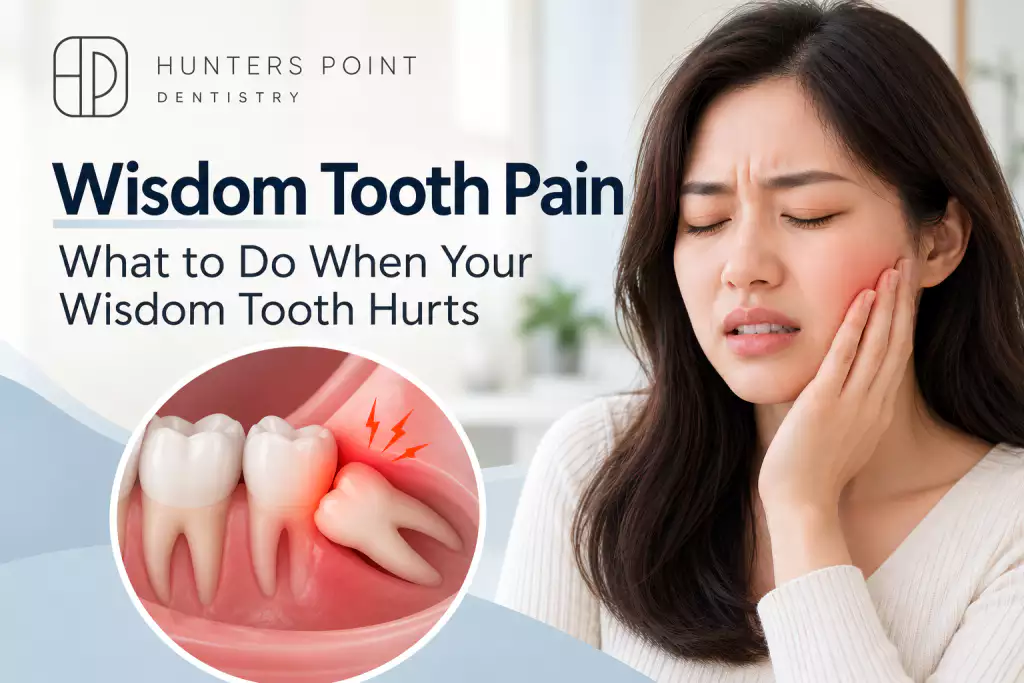
A tooth may remain completely under the gum or bone. It may also erupt only part of the way. Dentists call this an impacted or partially impacted wisdom tooth. A partially erupted tooth can leave a small flap of gum over the crown. Food and bacteria may collect underneath that tissue.
This trapped debris can irritate the gum and lead to inflammation around the tooth. Dentists call this condition pericoronitis. It can cause soreness, swelling, bad breath, an unpleasant taste, and difficulty opening the mouth.
Wisdom Tooth Pain can also come from a cavity in the wisdom tooth or the second molar in front of it. These areas are difficult to brush and floss. In some cases, an impacted tooth can also affect nearby structures. Therefore, an examination is useful even when the pain seems manageable.
Common Wisdom Pain Symptoms
Symptoms vary from person to person. Some patients notice pressure behind the last molar. Others feel a dull ache or sharp pain when they bite down. The gum may look red or swollen.
You may also notice food getting trapped at the back of the mouth. Bad breath or a persistent unpleasant taste can occur when the area is difficult to clean. In addition, inflammation may make the jaw feel stiff.
Pain intensity alone does not reveal the cause. A mildly painful tooth can still have decay or gum problems. On the other hand, temporary eruption discomfort may settle without major treatment. At Hunters Point Dentistry, Dr. Cho looks for the source of the symptoms before recommending treatment.
What to Do for Wisdom Tooth Pain at Home
Home care may reduce discomfort while you arrange a dental visit. First, gently rinse with warm salt water. This can help clean the gum around a partially erupted tooth. Continue brushing, but be gentle around swollen tissue.
A cold compress on the outside of the cheek may also help with swelling. If you can safely take an over-the-counter pain reliever, follow the label or instructions from your healthcare professional. Do not place aspirin directly on the gum because it can irritate oral tissue.
For the next day or two, choose foods that are comfortable to chew. Try to keep food from packing behind the last molar. Avoid repeatedly touching the painful area with your fingers or other objects.
These steps provide temporary relief. They do not correct an impacted tooth, remove decay, or treat every infection. If Wisdom Tooth Pain keeps returning, schedule an examination even if the pain improves between episodes.
When Tooth Pain Needs Urgent Care
Some symptoms require faster attention. Contact a dentist promptly if pain is getting worse, swelling is increasing, or you have trouble opening your mouth. Fever, pus, drainage, or a persistent foul taste can also occur with infection.
More serious symptoms should not wait for a routine appointment. Seek urgent medical or dental attention if swelling spreads quickly into the face or neck. Difficulty swallowing or breathing also requires urgent evaluation.
Hunters Point Dentistry evaluates urgent dental symptoms in Long Island City. Dr. Cho can determine whether the problem comes from the wisdom tooth, surrounding gum, neighboring molar, or another source. If a case needs complex surgical care, a referral to an oral and maxillofacial surgeon may be appropriate.
How Dentists Diagnose Wisdom Tooth Pain
Diagnosis starts with your symptoms. Your dentist may ask when the pain began and whether it comes and goes. They may also ask about swelling, bad taste, chewing pain, fever, or previous episodes.
Next, the dentist examines the back of the mouth. The examination may reveal swollen gum tissue, decay, drainage, food trapping, or a partially erupted tooth. The neighboring second molar also needs attention because it can be affected by a poorly positioned wisdom tooth.
Dental X-rays are often helpful because much of an impacted tooth may be hidden under gum or bone. Imaging can show the position of the tooth and its relationship to nearby structures. At Hunters Point Dentistry, Dr. Cho uses the clinical examination and appropriate imaging to explain the findings and discuss the next step.
Does Wisdom Tooth Pain Always Mean Extraction?
No. A painful wisdom tooth does not automatically need extraction. A wisdom tooth that has fully erupted, functions normally, can be cleaned well, and has no disease may be monitored.
Extraction is more commonly considered when there is recurrent infection, significant decay, periodontal disease, damage to a neighboring tooth, or other pathology. A partially erupted tooth that repeatedly becomes inflamed may also be difficult to maintain.
There is no single treatment plan for every impacted tooth. Age, tooth position, hygiene access, medical history, symptoms, and imaging findings all matter. Therefore, Dr. Cho discusses the specific reason for monitoring, treatment, extraction, or referral with patients at Hunters Point Dentistry.
Wisdom Tooth Pain From Pericoronitis
Pericoronitis is a common reason for pain around a partially erupted lower wisdom tooth. A flap of gum may cover part of the tooth. Food and bacteria can become trapped underneath it, which makes the area difficult to keep clean.
Symptoms may include localized pain, swelling, bad taste, drainage, or limited mouth opening. Treatment depends on how severe the inflammation is and whether it has happened before. Professional cleaning or irrigation may be part of care.
If the same area becomes inflamed repeatedly, the tooth’s position may make future episodes likely. In that situation, a longer-term treatment plan may be needed. Hunters Point Dentistry and Dr. Cho can evaluate whether the episode is temporary or part of a recurring problem.
Do Antibiotics Help the pain?
Antibiotics are not the correct treatment for every toothache. Wisdom Tooth Pain does not automatically mean that you have an infection requiring antibiotics. In addition, antibiotics cannot change the position of an impacted tooth or repair a cavity.
A dentist may prescribe antibiotics when the examination shows an infection for which they are clinically appropriate. Even then, the underlying dental problem may still need treatment. For that reason, do not rely on leftover antibiotics or medication prescribed for someone else.
If you have swelling, fever, drainage, or worsening symptoms, contact a dental professional. Dr. Cho can determine whether medication is appropriate and whether you also need local treatment, extraction, or specialist care.
What Happens if a Wisdom Tooth Is Removed?
If removal is recommended, the procedure depends on the tooth’s position. A fully erupted tooth may be simpler to remove. A tooth that is deeply impacted under gum or bone can require a surgical approach.
Before treatment, the clinician reviews your medical history, medications, imaging, and anesthesia options. After extraction, some swelling, soreness, and temporary jaw stiffness are common. You will receive instructions for eating, cleaning the mouth, and protecting the extraction site.
Follow those instructions carefully. Contact the treating office if pain becomes severe or unexpectedly worsens, bleeding is excessive, swelling keeps increasing, or you develop fever, pus, difficulty swallowing, or difficulty breathing.
How Long Does the pain Last?
There is no exact timeline because the cause matters. Mild gum irritation may improve within a short period. However, inflammation around a partially erupted tooth can improve and later return.
Decay and structural problems usually do not resolve simply because the pain stops. Therefore, pay attention to the pattern. Pain that repeatedly returns, interferes with eating or sleep, or occurs with swelling should be evaluated.
At Hunters Point Dentistry, Dr. Cho can distinguish temporary irritation from a condition that is likely to recur. An examination also gives the dentist a chance to check the second molar beside the wisdom tooth.
Can Wisdom Tooth Pain Cause Ear or Jaw Pain?
Pain from the back of the mouth can sometimes feel as though it spreads toward the jaw, ear region, or side of the face. This can make it difficult to identify the exact tooth that hurts.
However, ear and jaw pain have many possible causes. They should not automatically be blamed on a wisdom tooth. A dental examination can help determine whether there is a clear oral source.
Tell your dentist about all of your symptoms. For example, mention swollen gum tissue, chewing pain, bad taste, or difficulty opening your mouth. This information can help Dr. Cho evaluate the problem more accurately.
Can Wisdom Tooth Pain Go Away on Its Own?
Yes, some mild symptoms can temporarily improve. Gum irritation may settle, and cleaning trapped food from the area can make it feel better. However, improvement does not prove that the tooth is healthy.
A partially erupted tooth may continue to trap bacteria after the soreness disappears. Likewise, a cavity can progress between painful episodes. Repeated Wisdom Tooth Pain is therefore more important than a single short episode.
If the same area keeps hurting, have it checked. Hunters Point Dentistry can document the tooth’s position and condition. Dr. Cho can then recommend monitoring or treatment based on the actual findings.
Preventing Future Wisdom Tooth Problems
You cannot create extra jaw space at home. However, good hygiene can reduce avoidable inflammation and decay. Brush carefully behind the second molars and clean between teeth where access allows.
Regular dental examinations are also important. A wisdom tooth that stays in the mouth should be monitored for gum health, decay, hygiene access, and effects on neighboring teeth. Dental imaging may be recommended when clinically appropriate.
If a wisdom tooth is difficult to clean, ask for specific hygiene advice. Hunters Point Dentistry focuses on preserving healthy teeth when possible while identifying problems before they become more difficult to manage.
FAQ:
How do I know if the pain is really from a wisdom tooth?
Pain behind the last molar, swollen gum tissue, food trapping, and tenderness can suggest a wisdom tooth problem. However, a cavity, cracked tooth, gum problem, or another condition can feel similar. A dental examination is the best way to identify the source.
Is Wisdom Tooth Pain a dental emergency?
Not every episode is an emergency. However, rapidly increasing swelling, difficulty swallowing, or difficulty breathing requires urgent attention. Worsening pain, fever, drainage, or limited mouth opening also deserves prompt dental care.
Can salt water help Wisdom Tooth Pain?
A gentle warm salt-water rinse may soothe irritated gum tissue and help keep the area cleaner. It is supportive care only. It does not fix impaction, decay, or a significant infection.
Should every impacted wisdom tooth be removed?
No. Treatment depends on symptoms, disease, tooth position, hygiene access, and other individual factors. Some disease-free wisdom teeth can be monitored.
Will antibiotics cure Wisdom Tooth Pain?
Not necessarily. Antibiotics may be appropriate for certain infections, but they do not correct an impacted tooth or repair decay. The underlying dental cause still needs to be evaluated.
Wisdom Tooth Pain Care in Long Island City
Wisdom Tooth Pain is common, but the right treatment depends on the cause. Temporary home care may reduce discomfort. However, persistent or recurrent symptoms should be examined so that infection, decay, gum inflammation, impaction, and problems involving the neighboring molar are not missed.
Hunters Point Dentistry serves patients who live and work throughout LIC, Hunters Point, Court Square, Queensboro Plaza, Gantry Plaza, Dutch Kills, Ravenswood, Blissville, and Queensbridge. Dr. Cho can evaluate the painful area, review appropriate imaging, explain the findings, and discuss whether monitoring, treatment, extraction, or specialist referral makes sense for your situation.
If you are experiencing Wisdom Tooth Pain, call Hunters Point Dentistry at 347-507-5759 or use the link below to make an appointment with Dr. Cho. Prompt evaluation is especially important when the pain is worsening, swelling is present, or symptoms keep returning.
Disclosure: This information is for educational purposes only and does not constitute medical advice. For personalized advice and diagnosis, please consult with a qualified dental professional at Hunters Point Dentistry.