
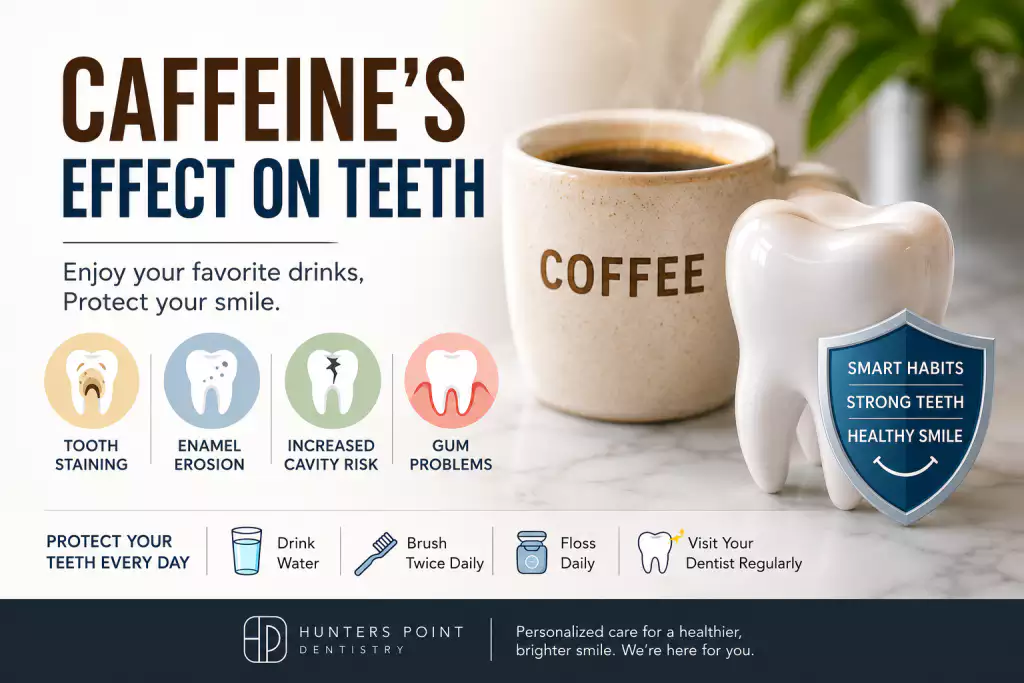
Caffeine’s effect on teeth
Caffeine’s effect on teeth is a concern for many people living busy, coffee‑fueled lives—especially in Long Island City, where coffee shops and cafés are part of the daily routine. In this blog post, we’ll explore caffeine’s effect on your teeth in a clear, easy‑to‑read way, so you can enjoy your favorite drinks while still protecting your smile. At Hunters Point Dentistry, Dr. Cho frequently educates patients about how everyday habits, including caffeine consumption, impact long‑term oral health. Understanding caffeine’s effect on your teeth can help you prevent stains, reduce decay risk, and maintain a healthier smile.
Caffeine itself isn’t always the main culprit, but the drinks that contain it—such as coffee, tea, soda, and energy drinks—can significantly influence enamel health, tooth color, and overall oral hygiene. Hunters Point Dentistry believes patient education is the foundation of prevention, and Dr. Cho emphasizes that small daily choices make a big difference over time.
Understanding Caffeine’s Effect on Enamel Health
When patients ask Dr. Cho about caffeine’s effect on your teeth, enamel health is often the first topic discussed. Tooth enamel is the hard, outer protective layer of your teeth, and once it’s damaged, it cannot regenerate. While caffeine alone does not erode enamel, many caffeinated beverages are acidic, which weakens enamel over time.
Acidic beverages soften enamel, which increase your teeth vulnerability to:
- Cavities
- Sensitivity to hot and cold
- Surface roughness that attracts stains
Coffee, black tea, green tea, sodas, and energy drinks are all acidic in various levels. At Hunters Point Dentistry, Dr. Cho often reminds patients that sipping acidic drinks throughout the day is more harmful than drinking them in one sitting. Prolonged exposure keeps enamel in a weakened state, increasing the risk of long‑term damage.
Another part of caffeine’s effect on your teeth involves saliva. Caffeine can contribute to dry mouth by reducing saliva flow. Saliva plays an essential role in neutralizing acids, washing away bacteria, and helping strengthen enamel. Without adequate saliva, teeth are more susceptible to decay and bad breath.
Caffeine’s Effect on Tooth Staining
One of the most noticeable aspects of caffeine’s effect on your teeth is staining. Coffee and tea contain tannins, which cause color compounds to stick to tooth enamel. Over time, this leads to yellow or brown discoloration that brushing alone may not remove.
Patients at Hunters Point Dentistry frequently ask Dr. Cho why their teeth look dull even though they brush regularly. The answer often lies in daily caffeine habits. Dark beverages penetrate microscopic pores in enamel, especially if enamel has already been weakened by acid exposure.
Common staining culprits include:
- Black coffee
- Espresso
- Iced coffee
- Black and green tea
- Energy drinks
- Cola and dark sodas
Caffeine’s effect on your teeth becomes more pronounced if these drinks are consumed without rinsing with water afterward. Dr. Cho recommends alternating caffeinated beverages with water to help reduce staining and acid exposure.
Surface stains can be eliminated with professional cleanings at Hunters Point Dentistry. But for deeper discoloration, whitening treatments may be necessary. This is why regular dental visits are essential for patients who drink coffee or tea daily.
Caffeine’s Effect on Increased Risk of Cavities
Another important aspect of caffeine’s effect on your teeth is cavity formation. While plain coffee or tea without sugar may not directly cause cavities, many caffeinated drinks contain added sugars or flavorings. Sugar feeds harmful oral bacteria, which produce acids that attack enamel.
Even sugar‑free drinks can still pose a risk due to their acidity. At Hunters Point Dentistry, Dr. Cho explains that acid erosion and bacterial decay often work together, accelerating tooth damage.
Caffeine‑related cavity risks increase when:
- Sugar or flavored syrups are added
- Drinks are sipped slowly over long periods
- Oral hygiene routines are inconsistent
- Dry mouth is present
Caffeine’s effect on your teeth is especially concerning for patients who rely on energy drinks or sodas for daily energy boosts. These beverages often combine high acidity with sugar, creating a perfect environment for decay.
Routine exams at Hunters Point Dentistry allow Dr. Cho to detect early signs of cavities before they become painful or costly problems.
Your Gum Health
While most discussions about caffeine’s effect on your teeth focus on enamel and staining, gum health is equally important. Dry mouth caused by caffeine can increase plaque buildup along the gumline, raising the risk of gingivitis and periodontal disease.
Healthy gums rely on saliva to flush away bacteria. Without it, plaque hardens into tartar, which cannot be removed by brushing alone. Dr. Cho often educates patients at Hunters Point Dentistry on how lifestyle habits influence gum inflammation.
Signs caffeine‑related gum issues may be developing include:
- Bleeding gums
- Persistent bad breath
- Gum tenderness
- Receding gums
Caffeine’s effect on your teeth and gums becomes more serious when combined with smoking or poor oral hygiene. Preventive cleanings and personalized care plans at Hunters Point Dentistry help patients protect both teeth and gums.
Reducing Caffeine’s Effect on Your Teeth with Smart Habits
The good news is that you don’t have to give up coffee or tea entirely to protect your smile. Managing caffeine’s effect on your teeth is possible with a few simple strategies recommended by Dr. Cho.
Choosing the right caffeinated drinks is one of the most effective ways to reduce caffeine’s effect on teeth. Certain beverages are less acidic and less likely to stain enamel, making them better options for protecting your smile—especially for coffee and tea drinkers in Long Island City.
According to Dr. Cho at Hunters Point Dentistry, the best caffeinated drinks for your teeth are those with lower acidity and minimal added sugar.
Best caffeinated drinks for your teeth include:
- Cold brew coffee, which is typically less acidic than hot coffee
- Coffee or tea with milk, as milk helps neutralize acids
- Unsweetened green tea, which has fewer staining tannins
- Plain coffee consumed in one sitting, rather than sipped all day
These options help minimize enamel softening and reduce long-term staining.
On the other hand, some drinks significantly increase caffeine’s effect on teeth and should be limited when possible.
Caffeinated drinks that increase damage to teeth include:
- Energy drinks (are among the worst offenders due to their high acidity and sugar content)
- Sweetened iced coffee and flavored lattes (increase cavity risk)
- Sodas and colas (combine enamel erosion with heavy staining)
- Coffee with citrus or flavored syrups (also increase cavity risk)
Even sugar-free drinks can harm enamel due to high acidity alone. This is why caffeine’s effect on teeth depends not only on sugar content but also on how acidic the drink is.
To further reduce caffeine’s effect on teeth, Dr. Cho recommends helpful habits such as:
- Drinking or rinsing with water after caffeinated drinks
- Avoid brushing immediately after acidic drinks (waiting at least 30 minutes allows softened enamel time to reharden, reducing damage)
- Using a straw when possible to reduce contact with teeth
- Limit sugar and flavored syrups
- Avoiding all-day sipping and instead, enjoy in one sitting
- Maintain regular dental cleanings
For Long Island City residents, making these small changes—combined with routine cleanings at Hunters Point Dentistry—can protect enamel, reduce staining, and support long-term oral health without giving up caffeine.
At Hunters Point Dentistry, patients receive personalized advice based on their daily habits. Dr. Cho emphasizes consistency—small protective steps done daily are far more effective than occasional changes.
Using fluoride toothpaste and considering professional fluoride treatments can also help strengthen enamel against acid attacks related to caffeine consumption.
Professional Care for Managing on Your Teeth
Even with excellent home care, professional dental visits play a crucial role in minimizing caffeine’s effect on your teeth. Routine exams and cleanings remove plaque, tartar, and surface stains that brushing can’t eliminate.
Hunters Point Dentistry offers comprehensive preventive and cosmetic services to help patients maintain bright, healthy smiles. Dr. Cho carefully monitors enamel health, gum condition, and signs of decay during each visit.
Professional options may include:
- Dental cleanings
- Teeth whitening treatments
- Fluoride applications
- Customized oral hygiene recommendations
For patients concerned about discoloration or sensitivity, Dr. Cho develops tailored treatment plans that align with their lifestyle and caffeine habits.
Final Thoughts on Your Teeth
Caffeine’s effect on your teeth doesn’t mean you have to give up your favorite drinks—it simply means being informed and proactive. Understanding how caffeine affects enamel, staining, cavities, and gum health empowers you to make smarter choices every day.
At Hunters Point Dentistry, Dr. Cho and our dedicated team are committed to helping patients across our vibrant local communities, including Hunters Point, LIC, Queensboro Plaza, Court Square, Gantry Plaza, Dutch Kills, Ravenswood, Blissville, and Queensbridge, enjoy both great oral health and their daily routines. Regular dental visits, good home care, and mindful caffeine consumption can make all the difference.
If you’re concerned about staining, sensitivity, or decay related to caffeine, we are here to help. Call us at 347-507-5759 or use the link below to schedule an appointment with Dr. Cho. We will help you protect your smile while still enjoying the beverages you love.
Disclosure: This information is for educational purposes only and does not constitute medical advice. For personalized advice and diagnosis, please consult with a qualified dental professional at Hunters Point Dentistry.